


Contents
Want to LEARN More About Us?
Follow Us On


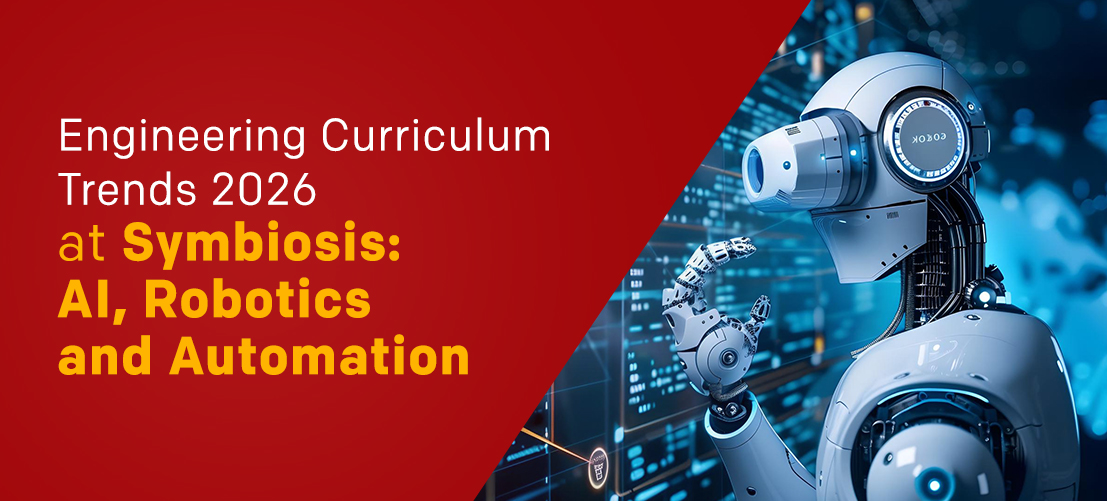
Engineering education in 2026 is strongly driven by real-world applications, intelligent technologies, and industry integration. The focus has shifted from theory-heavy learning to outcome-based education, where you understand how engineering concepts function in live environments. Emerging fields such as artificial intelligence, robotics, automation, data analytics, and smart systems are now core components of modern engineering curricula.
At Symbiosis Institute of Technology across SIT campuses, engineering programmes are designed to align with these global and industry-driven trends. The curriculum integrates hands-on learning, interdisciplinary exposure, and advanced technological training to ensure students are future-ready from the first year.
Why the engineering curriculum is changing in 2026
You pursue engineering at a time when industries expect job-ready skills. Employers look for engineers who understand data, machines and automated systems.
The main reasons behind this shift include:
- Increased use of artificial intelligence across industries
- Growing adoption of robotics in manufacturing and services
- Expansion of automation for efficiency and safety
- Demand for engineers who combine software and hardware knowledge
Engineering curriculum trends 2026 focus on application, system thinking and real-world outcomes.
Key engineering curriculum trends you should understand
Application-based learning
You learn concepts and apply them through labs and projects. Evaluation depends on how you design and test solutions.
Artificial intelligence as a core subject
AI is taught as a structured discipline. You study data handling, algorithms and intelligent decision making.
Robotics is linked with automation
Robotics courses include automation systems, control logic and industrial processes.
Industry-aligned assessment
Projects mirror real engineering problems. You explain results and justify design choices.
How Symbiosis aligns its engineering programmes with these trends
Symbiosis offers engineering programmes across multiple SIT campuses. Each campus supports the engineering curriculum trends 2026 differently.
Symbiosis Institute of Technology, Pune
SIT Pune campus offers specialised programmes aligned with advanced curriculum requirements:
- B.Tech Artificial Intelligence and Machine Learning
- B.Tech Robotics and Artificial Intelligence
- B.Tech Robotics and Automation
You study engineering fundamentals alongside advanced labs. Learning focuses on system design, simulations and prototypes.
Symbiosis Institute of Technology, Hyderabad
SIT Hyderabad campus offers:
- B.Tech Computer Science and Engineering with Artificial Intelligence and Machine Learning
You build strong computer science foundations while learning AI applications used in modern systems.
Symbiosis Institute of Technology, Nagpur
SIT Nagpur campus offers:
- BTech Computer Science and Engineering
SIT Nagpur does not offer a standalone AI or robotics programme. You gain exposure to emerging technologies through core computer science subjects. This suits you if you want strong fundamentals before specialising later.
What you study in AI, robotics and automation programmes
Artificial intelligence-focused learning includes:
- Programming and data structures
- Probability and statistics
- Machine learning fundamentals
- Model testing and optimisationz
Robotics and automation learning includes:
- Sensors and actuators
- Control systems
- Automation workflows
- Robotic system integration
Hands-on work forms a major part of your academic experience.
Entry routes to Symbiosis engineering programmes
You apply for Symbiosis engineering programmes through defined admission routes. Symbiosis Engineering Entrance Test options include SITEEE and other accepted pathways as notified by the university.
At specific stages, SET engineering appears as a reference for students exploring undergraduate routes within Symbiosis. All admission details are shared on the official platform.
Career outcomes linked to engineering curriculum trends 2026
Graduates from AI, robotics and automation aligned programmes move into roles such as:
- Artificial intelligence engineer
- Robotics systems engineer
- Automation engineer
- Machine learning specialist
These roles exist across manufacturing, healthcare, mobility and technology services.
Why this matters for you after Class 12
Engineering courses after 12th science must prepare you for future industries. Programmes aligned with engineering curriculum trends 2026 offer long-term relevance.
Symbiosis engineering programmes focus on:
- Practical exposure
- Modern tools
- Skill-based learning
- Clear academic progression
This approach supports steady career growth.
Conclusion
Engineering education in 2026 values intelligence, automation and real-world application. Symbiosis has aligned its engineering programmes across Pune, Hyderabad and Nagpur with these expectations. You gain skills that connect theory with practice and prepare you for evolving industries.
Explore Symbiosis engineering programmes through the official SET 2026 platform. Apply through the authorised website and take the next step towards a future-ready engineering career.
Frequently Asked Questions
The future of robotics and automation engineering is strong. Industries use automation to improve productivity and safety. Engineers work across manufacturing, logistics, healthcare and smart infrastructure.
Courses that combine artificial intelligence with robotics and automation offer better outcomes. Programmes that include programming, control systems and AI applications prepare you for integrated roles.
Yes. Robotics is a good career in 2026 because industries continue to invest in automated systems. Skilled engineers remain essential for system design and maintenance.
No. AI supports robotics engineers. Engineers design systems, manage integration and ensure safety. Human expertise remains essential.
Related Blogs

Step into the Culinary World with Symbiosis School of Culinary Arts and Nutritional Sciences (SSCANS)
If you have a passion for food, cooking, and nutrition, then the Symbiosis School of Culinary Arts and Nutritional Sciences (SSCANS) is the perfect place for you to start your career. SSCANS offers world-class programs that not only focus on the culinary arts but also give you a deep understanding o
Step into the Symbiosis World - Know more about SIT, Pune
Symbiosis Institute of Technology, Pune a part of Symbiosis International (Deemed University), was founded in 2008 and currently offers an array of advanced courses in technology. Students at SIT,
Step into the Symbiosis World - Know More about SCMS, NOIDA
SET Exam application forms are out, and if you need assistance to register for the exam then head over to this page -> SET exam registration for 2025.
Step Into The Symbiosis World - Know More About SCMS Pune
SET registrations for 2025 have begun. SET is the competitive entrance exam that you have to appear for to take admission to colleges under Symbiosis International (Deemed University).


